Solo Travel Packing Checklist 2026: 47 Essentials You Actually Need
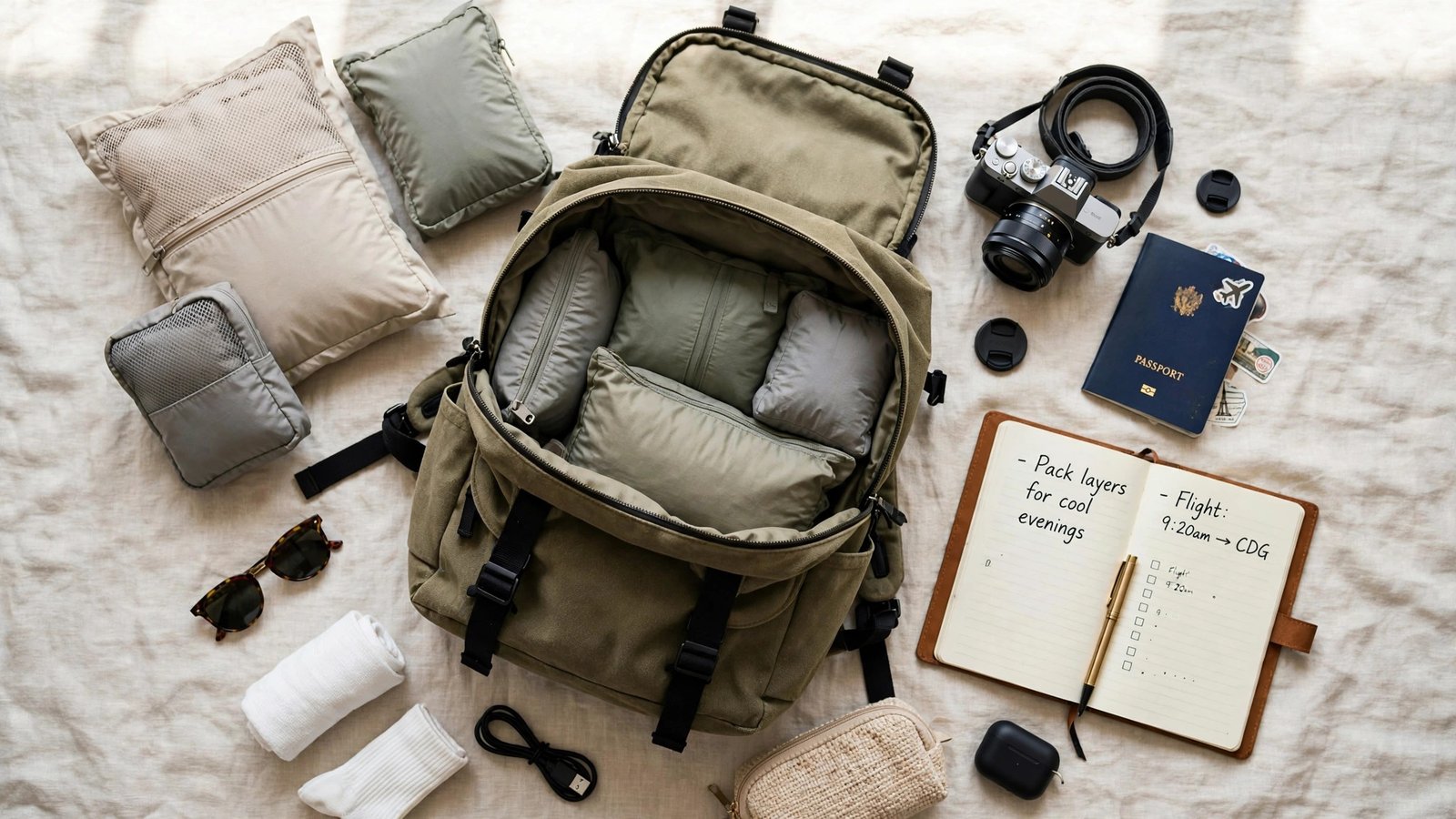
Packing for a solo trip feels different from packing for any other kind of travel. There is no one to borrow a charger from, no one to watch your bag while you run to the restroom, and no one to split the weight of shared gear. Your bag has to be complete, light, and smart — because you are the entire team.
This solo travel packing checklist covers 47 essentials across six categories, each with a short note on why it actually matters when you are on your own. Think of it as printable: run down the list the night before you fly, and you will board with total peace of mind.
The Solo Packing Philosophy
Before the list, three rules that many experienced solo travelers swear by:
- Pack for one week, not for the trip. Laundry exists everywhere — laundromats, hotel services, even a sink and travel soap. A 3-week trip does not need 3 weeks of clothes.
- Every item must earn its place twice. If you cannot name two situations where you will use it, leave it home.
- Security items are not optional when solo. A door lock and document backups weigh almost nothing and matter enormously when there is no travel partner watching your back.
Documents & Money
Your documents are the one category where redundancy is mandatory. Losing your passport solo is stressful; losing it with no backup plan is a trip-ender.
- Passport — Check that it is valid for at least 6 months beyond your travel dates, a common entry requirement as of 2026.
- Visa or entry-requirement printout — Even for visa-free destinations, carry proof of the rules in case an airline agent asks.
- Travel insurance policy — Save it digitally and print one page with the emergency number. You hope never to use it; you must always have it.
- Backup photo ID — A driver’s license or national ID, stored separately from your passport.
- Digital scans of everything — Passport, visas, insurance, and bookings saved in cloud storage and emailed to yourself.
- Two cards from different networks — One Visa, one Mastercard (for example), so a single network outage never strands you.
- Emergency cash — Around $100–200 USD in small bills as a budget example, hidden separately from your wallet. Cash solves problems cards cannot.
- Offline booking confirmations — Screenshots or PDFs of flights and hotels, accessible without internet.
Tech & Gadgets
When you travel alone, your phone is your map, translator, bank, camera, and emergency line. Protect it like the lifeline it is.
- Smartphone + charger — Obvious, but double-check the charger the night before. Many solo travelers say a forgotten charger is the most common packing regret.
- Universal power adapter — One adapter that covers every plug type beats a tangle of single-country ones.
- Power bank — A 10,000–20,000 mAh power bank (example capacity) keeps your phone alive through long travel days when outlets are scarce.
- Earbuds or noise-cancelling headphones — Essential for overnight buses, noisy hostels, and tuning out the world when you need to.
- eSIM QR code or local SIM plan details — Arrange connectivity before you land so you have maps and ride apps from minute one.
- A spare USB cable — Cables fail at the worst moments. A backup weighs grams and saves trips.
- Small flashlight or headlamp — For poorly lit hostel dorms, night walks, and power outages. Your phone flashlight drains the battery you need for maps.
- Lightweight tablet or e-reader (optional) — Worth it for long trips; skip it for short ones to save weight.
Safety & Health
This is the category group travelers most often skip — and the one solo travelers need most.
- Basic first-aid kit — Plasters, antiseptic wipes, painkillers, antihistamines, and any personal essentials. Pharmacies abroad may not stock what you expect.
- Personal medications + prescriptions — Bring more than you need, in original packaging, with a copy of the prescription.
- Hand sanitizer and wet wipes — Street food, public transport, and questionable restrooms make these daily-use items.
- A couple of face masks — Still useful for dusty buses, crowded metros, or when you feel a cold coming on.
- Whistle or personal alarm — Tiny, loud, and effective at drawing attention. Many solo travelers clip one to their daypack and never think about it again — which is the point.
- Portable door lock — Adds a layer of security to hotel and guesthouse doors. Weighs almost nothing; peace of mind is heavy.
- High-SPF sunscreen — Buy it at home where you know the brands. Tourist-area sunscreen abroad is often overpriced.
- Insect repellent — Especially for tropical destinations. Dengue and other mosquito-borne illnesses are a real consideration as of 2026.
- Cloud backups of documents — Worth repeating: if your bag is stolen, cloud copies of your passport and insurance turn a disaster into an errand.
Clothing
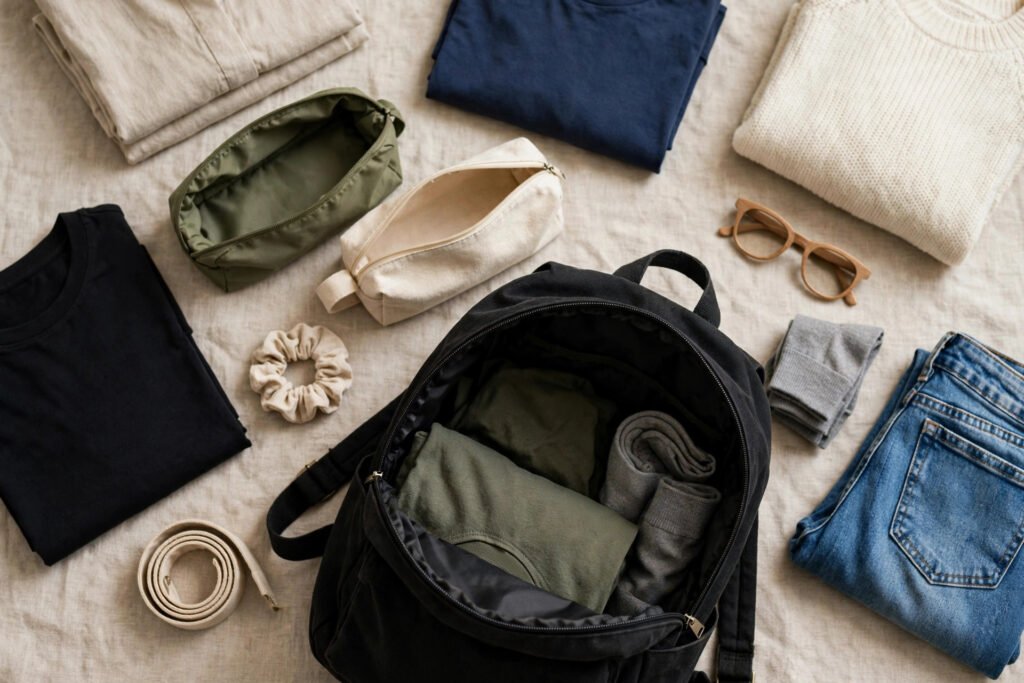
Versatility beats quantity. Choose fabrics that dry fast, resist wrinkles, and layer well.
- Broken-in walking shoes — The single most important clothing item. Never travel in new shoes; blisters can ruin days.
- Lightweight sandals or flip-flops — For beaches, hostel showers, and giving your feet a break.
- 5–7 pairs of quick-dry underwear — Enough for a week between washes.
- 4–5 pairs of socks — Moisture-wicking if you will be walking a lot.
- 2–3 versatile tops — Neutral colors that mix and match with everything.
- 1–2 bottoms — Comfortable pants or shorts suited to the climate and local norms.
- A light sweater or fleece — For air-conditioned buses, cool evenings, and mountain areas. Layers beat one heavy jacket.
- Packable rain jacket or poncho — Weather turns fast in the tropics and mountains alike.
- Sleepwear — Especially important in hostel dorms.
- Swimsuit + sarong or scarf — The sarong doubles as a beach cover-up, temple wrap, blanket, and privacy curtain. Arguably the hardest-working item on this list.
Toiletries
Go small, go solid, go refillable. Full-size bottles are dead weight.
- Toothbrush + toothpaste — Travel-size toothpaste; you can buy more anywhere.
- Deodorant — Surprisingly hard to find your preferred type abroad.
- Solid shampoo and conditioner bars — No leaks, no liquid limits, last for weeks.
- Razor — A simple one; avoid packing expensive cartridges you cannot replace.
- Moisturizer + lip balm with SPF — Sun, wind, and air conditioning dry skin fast.
- Contact lens supplies or spare glasses — Bring extras. Replacing a prescription abroad is slow and expensive.
- Small microfiber towel — Dries fast, packs tiny. Useful even when accommodation provides towels — beach days, surprise swims, hostel gaps.
Comfort & Daypack
- Daypack (20–25L is a good example size) — Your daily companion for sightseeing. It should fit water, snacks, a layer, and your valuables.
- Reusable water bottle — Saves money and plastic. In places where tap water is unsafe, fill up at hotel filtered-water stations.
- Neck pillow — The difference between arriving rested and arriving wrecked after an overnight journey.
- Eye mask + earplugs — Hostel dorms, early flights, and noisy streets. Sleep is precious; protect it.
- Laundry bag + a few ziplock bags — Separate dirty clothes, waterproof electronics, organize small items. Simple, endlessly useful.
Frequently Asked Questions
How many days of clothes should I pack for solo travel?
Pack for about 7 days regardless of trip length, then plan on doing laundry weekly. This keeps your bag manageable while ensuring you always have clean clothes. Quick-dry fabrics make sink washing practical in a pinch.
Should I bring a carry-on or checked bag for solo travel?
A carry-on–sized bag is ideal for most solo trips. It keeps you mobile, eliminates lost-luggage risk, and forces the kind of disciplined packing this checklist encourages. Go checked only for long trips needing bulky gear or cold-weather clothing.
What should solo travelers never pack?
Leave behind flashy jewelry, irreplaceable valuables, “just in case” outfits you will not wear twice, full-size toiletries, and more than one heavy book. Everything on the “never” list adds weight, worry, or both.
How do I keep valuables safe while packing light?
Use a small crossbody or money belt for your passport, cards, and phone during transit days; lock the rest in your accommodation. Digital backups in the cloud mean even a worst-case theft stays manageable. A portable door lock adds security at night.
Next steps: Got your bag sorted? If Thailand is calling, read our safety guide for solo female travelers in Thailand before you go — and if this is your first time traveling alone entirely, our step-by-step planning guide takes you from idea to boarding gate.