How to Plan Your First Solo Trip: Step-by-Step Budget Guide (2026)
Learning how to plan your first solo trip can feel overwhelming — excitement mixed with a hundred small questions. Where should you go? How much will it cost? What if something goes wrong? The good news: thousands of first-time solo travelers figure this out every year, and the process is far more straightforward than it looks from the outside.
This step-by-step guide breaks planning into four manageable stages: choosing your destination, building a realistic budget, booking at the right time, and surviving (then thriving in) your first 48 hours. Follow it in order, and you will go from “someday” to “boarding now” with confidence.
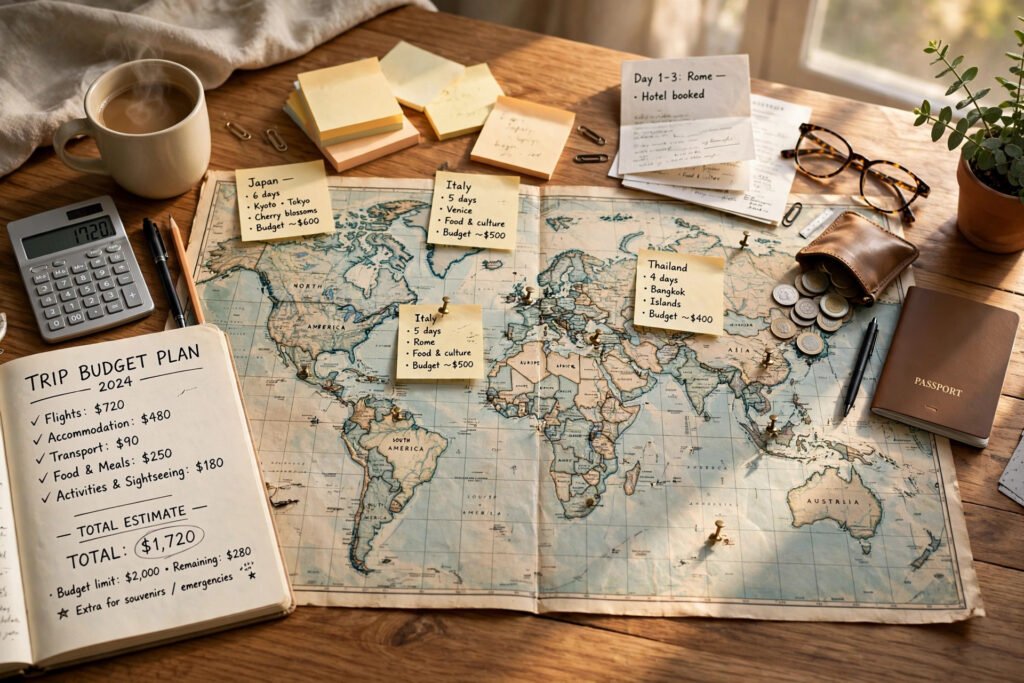
Step 1: Choose the Right First Destination
Your first solo destination sets the tone for everything. The best choice is not the most impressive one — it is the one that lets you build confidence instead of fighting logistics.
Look for these green flags:
- Good tourist infrastructure. Places with clear transport, plenty of accommodation options, and tourist information in English remove 80% of first-trip stress.
- A reputation for solo travel. Destinations like Thailand, Portugal, Japan, Vietnam, and Mexico are popular with solo travelers for a reason — you will meet others on the same journey, and locals are used to independent visitors.
- Affordability. Your money goes further in Southeast Asia, parts of Latin America, and Eastern Europe, which means less financial pressure while you learn the ropes.
- Manageable culture gap. For a first trip, many travelers prefer somewhere with familiar-enough food, easy communication, and a relaxed attitude toward tourists.
Red flags for a first solo trip: extreme language barriers with no tourism infrastructure, destinations requiring complex visas, places with active travel advisories, or anywhere you would feel uncomfortable navigating alone after dark.
The sweet spot: Pick somewhere you are genuinely excited about that also scores well on the checklist above. Enthusiasm carries you through the nervous moments — and there will be a few, which is completely normal.
Step 2: Build a Realistic Budget (With Example Numbers)
Budgeting is where vague dreams become concrete plans. The framework below works for any destination; the example numbers illustrate a 7-day trip in an affordable region like Southeast Asia. Always check current costs as of 2026 for your destination.
The 6 Budget Buckets
- Flights: ~$400–700 (example) — Book 6–8 weeks out; midweek departures are often cheaper.
- Accommodation: ~$105–210 (example) — Hostels or guesthouses at ~$15–30/night.
- Food: ~$105–175 (example) — Mix of street food and restaurants, ~$15–25/day.
- Local transport: ~$50–100 (example) — Buses, trains, ride apps, occasional taxi.
- Activities & entry fees: ~$100–150 (example) — Tours, temples, museums, one splurge experience.
- Buffer (10–15%): ~$100–200 (example) — For surprises; there are always surprises.
Example total: roughly $860–$1,535 for 7 days. Your actual costs will vary with destination, travel style, and season — a week in Japan or Western Europe could easily double these example figures, while a slow week in one Thai town could come in lower.
Budget Rules That Actually Work
- Set a daily spending target and track it loosely in a notes app. Awareness alone cuts overspending dramatically.
- Pre-pay the big fixed costs (flights, first nights’ accommodation, insurance) before you go. What is already paid cannot be overspent.
- Keep the buffer sacred. Do not absorb it into shopping money. It exists for missed buses, sudden downpours, and the cooking class you did not know you wanted.
- Price your splurge in advance. One memorable experience — a boat trip, a guided hike, a great meal — is worth ten forgettable souvenirs. Budget for it deliberately.
Step 3: Follow a Booking Timeline
Booking in the right order saves money and prevents the classic first-timer mistake of locking in non-refundable plans before the basics are sorted.
8+ Weeks Before: Foundations
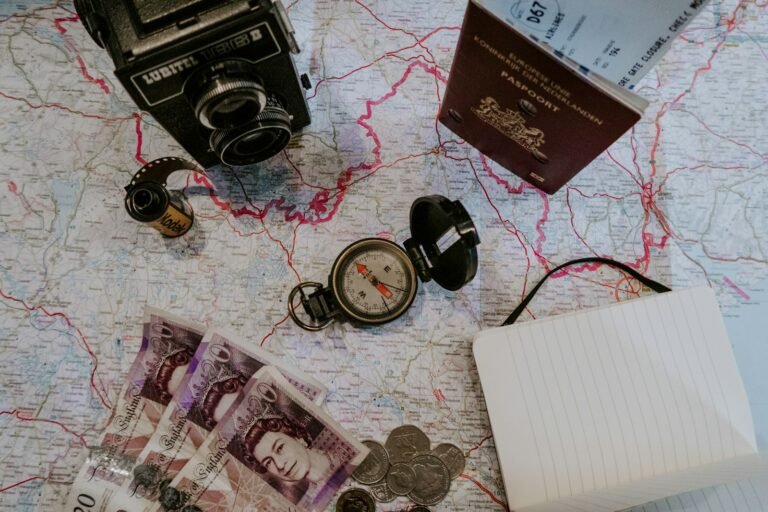
- Confirm your passport is valid (6+ months beyond travel dates is a common requirement as of 2026).
- Research visa and entry requirements for your destination.
- Buy travel insurance once your main bookings exist — it is cheapest when purchased early.
- Start a simple packing list (our solo travel packing checklist covers all 47 essentials).
6 Weeks Before: Flights
- Book flights around 6–8 weeks out for international trips — this is a widely cited example sweet spot, not a guarantee.
- Compare a few dates; flying midweek is often cheaper than weekends.
- Screenshot or save every confirmation where you can access it offline.
4 Weeks Before: Accommodation (First Nights Only)
- Book just your first 2–3 nights. This is a liberating trick many solo travelers swear by: it guarantees a soft landing while leaving you free to move if you fall in love with somewhere unexpected.
- Choose well-reviewed places in central areas — ratings around 8.5+ and recent reviews mentioning solo travelers are good signs.
- Arrange airport transfer or research the route to your accommodation in advance.
2 Weeks Before: Logistics
- Set up an eSIM or research local SIM options so you have data on arrival.
- Notify your bank of travel dates so your cards are not frozen.
- Download offline maps, translation apps, and your airline’s app.
- Share your full itinerary with someone at home.
1 Week Before: Final Checks
- Reconfirm flights and first-night accommodation.
- Pack using your checklist — then remove three things you added “just in case.”
- Photograph your documents and save copies to the cloud.
- Get cash in the right currency for arrival day (around $50–100 equivalent is a sensible example).
Step 4: Your First 48 Hours Plan
The first two days are the emotional crux of any first solo trip. Having a loose plan turns arrival anxiety into a gentle onboarding.
Day 1: Land softly. Get through the airport, sort your SIM and cash, and get to your accommodation. Do not plan anything ambitious. Walk the neighborhood, find a pharmacy and an ATM, eat somewhere simple, and sleep — give yourself that grace period.
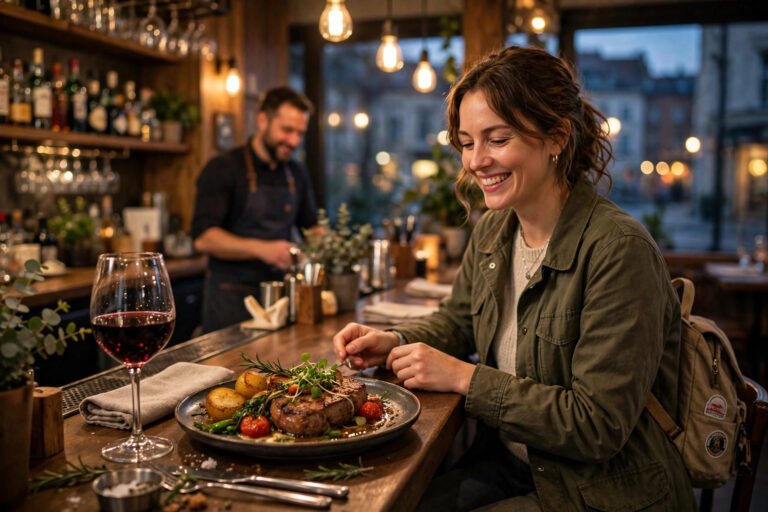
Day 2: Orient yourself. Take a free walking tour (perfect for meeting other travelers), visit one main sight, and try local transport once. Eat your first proper solo restaurant meal — it feels like a milestone because it is one.
Throughout: Keep your phone charged, stay aware of your surroundings after dark, and remember that asking for help is a skill, not a weakness. Hostel staff, tour guides, and fellow travelers are consistently the best sources of real-time advice.
5 Mistakes First-Time Solo Travelers Make
- Overplanning every hour. Leave blank space. The best solo travel moments — the invitation, the detour, the lazy afternoon — cannot be scheduled.
- Booking everything non-refundable. Flexibility is a first-timer’s superpower. Protect it.
- Skipping travel insurance. It is a small fraction of your budget and the one thing you cannot improvise in an emergency.
- Packing fears instead of essentials. You do not need six “just in case” outfits. You do need a door lock, document backups, and a power bank.
- Waiting until you feel “ready.” Readiness comes from going, not from preparing to go. At some point, book the flight.
Frequently Asked Questions
How much money do I need for my first solo trip?
It depends entirely on destination and style, but as a rough budgeting example, a 7-day trip to an affordable region often lands around $860–$1,535 including flights, while pricier regions can double that. Build your budget from the six buckets in Step 2 using current prices as of 2026, and always include a 10–15% buffer.
What is the best destination for a first solo trip?
There is no single best answer, but perennial favorites include Thailand, Portugal, Japan, and Vietnam — all combine good infrastructure, affordability, and welcoming attitudes toward solo travelers. Choose somewhere that excites you and scores well on the green flags in Step 1.
How far in advance should I book a solo trip?
Start planning 8+ weeks out, book international flights around 6 weeks ahead, and reserve just your first 2–3 nights of accommodation. Booking everything too early removes the flexibility that makes solo travel special.
Is it safe to stay in hostels as a first-time solo traveler?
Yes — hostels are arguably the safest-feeling option for first-timers because you are surrounded by other travelers and staff. Choose well-reviewed hostels, consider a female-only dorm if offered, use the lockers provided, and keep valuables on you or locked up during the day.
Ready for the details? Dive into our Solo Travel Packing Checklist 2026 to pack like a pro, and if Southeast Asia is on your shortlist, our Thailand safety guide for solo female travelers answers every “but is it safe?” question honestly.