Solo Travel for Seniors: The Complete Guide to Traveling Alone After 60
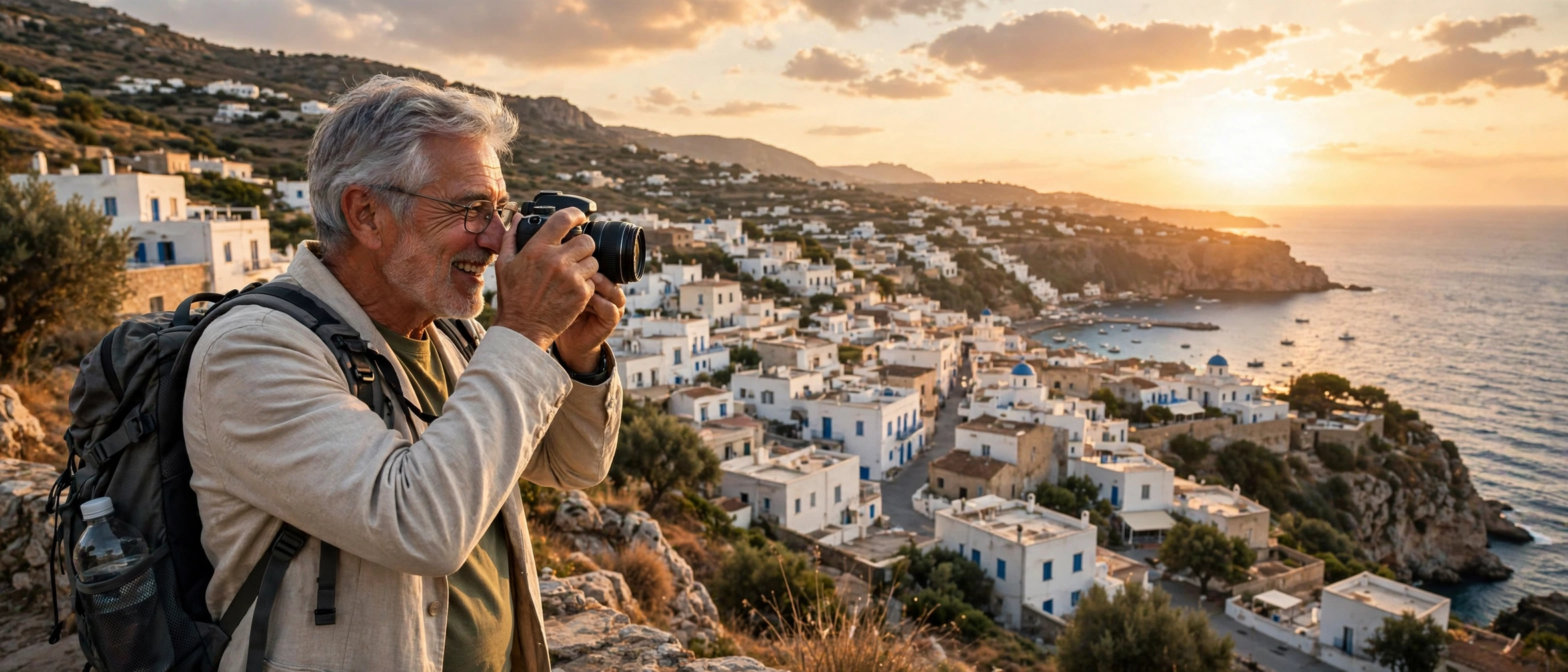
Solo travel for seniors isn’t a consolation prize for not having a travel companion — it’s one of the best decisions many people make in their 60s, 70s, and beyond. You have what younger travelers don’t: time, experience, and the freedom to move at your own pace. The solo travel world is full of people who started at 62, 68, even 75 — and found it was the most liberating thing they’d done in decades.
This guide covers everything you need: health and insurance preparation, how to pace your trips, the smartest ways to stay social on the road, and destinations that reward solo travelers over 60.
Why Your 60s (and Beyond) Can Be the Best Travel Years
Let’s name the advantages honestly. Younger travelers are often racing the clock — a week of vacation, a tight budget, pressure to see everything. You can travel in the shoulder season when prices drop and crowds thin. You can stay three weeks in one place instead of sprinting through five. You can afford the private room, the direct flight, the good travel insurance. And you have decades of life experience — reading people, trusting your instincts, solving problems — which is exactly the skill set solo travel rewards.
Many seniors discover that traveling alone is easier than traveling with a companion of different energy, interests, or schedule. You eat when you’re hungry, rest when you’re tired, and spend the afternoon in a museum nobody else wanted to visit. There’s no compromise, and no guilt about it.
Health Preparation: The Non-Negotiable Foundation

Good health prep is what separates a confident senior solo trip from an anxious one. Start 2–3 months before departure:
- See your doctor. Get a pre-travel checkup, discuss any destination-specific vaccinations, and make sure you have enough of every prescription for the full trip plus a buffer week. Ask for a letter describing your conditions and medications in generic terms — it’s invaluable if you need care abroad.
- Pack medications in your carry-on. Never in checked luggage. Bring a day or two extra in a separate bag as backup.
- Know your coverage. Standard health insurance usually doesn’t cover you abroad. A travel insurance policy with strong medical coverage and emergency medical evacuation is essential — not optional — for senior solo travelers. Our travel insurance guide explains what to look for, including pre-existing condition coverage.
- Carry a medical summary. A simple card in your wallet (and a copy on your phone) listing conditions, medications, allergies, blood type, and an emergency contact. If you can’t speak for yourself, this speaks for you.
- Research healthcare at your destination — know the nearest reputable hospital before you need one.
None of this is meant to frighten you — it’s meant to free you. Travelers who’ve done the prep stop thinking about health and start enjoying the trip.
Pacing: The Art of the Sustainable Itinerary
The single biggest mistake senior solo travelers make is copying a 25-year-old’s itinerary. Yours should be built differently:
- Avoid one-night stays. Three nights minimum per base: a day to explore, a day to rest, no daily packing stress.
- Build in rest days. Schedule a genuine do-nothing day every 4–5 days — a slow morning, a long lunch, an afternoon nap. You won’t “waste” the trip; you’ll enjoy the active days more.
- Arrive in daylight. Book flights and trains that land before dark. Navigating an unfamiliar city is hard enough; doing it tired and in the dark is unnecessary.
- Stay central. A well-located hotel saves more energy than any itinerary hack. Being able to walk back for a midday rest, or to reach restaurants without transport, changes how a trip feels.
- Two must-sees a day, max. Done well, they beat five done exhausted.
Staying Social: Solo Doesn’t Mean Alone
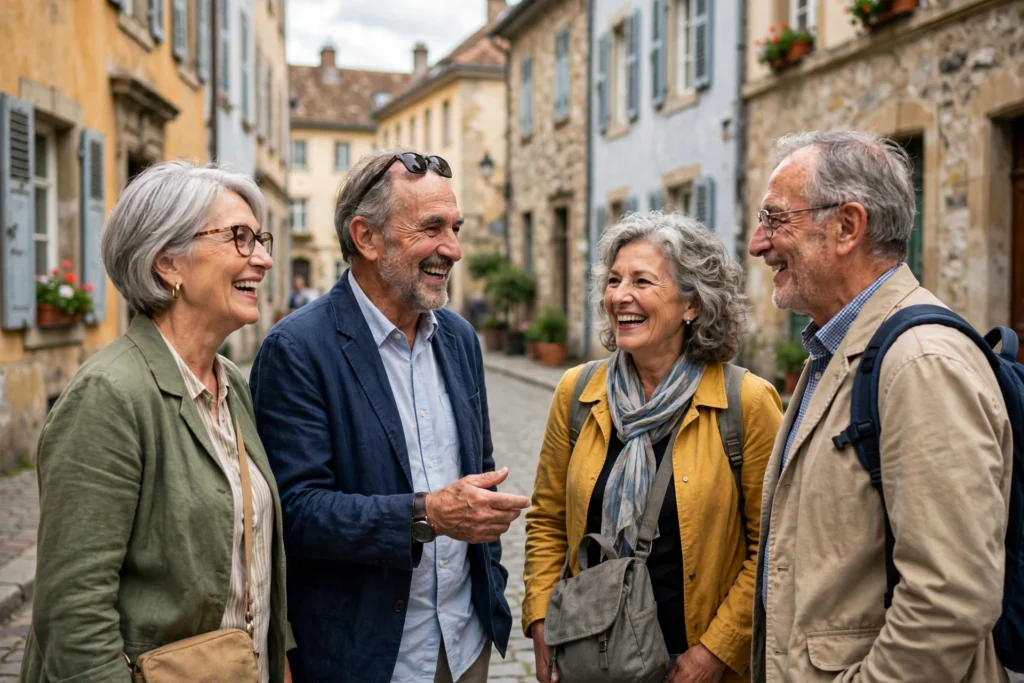
Loneliness is the most common worry, and the easiest to solve — the travel world is full of social structures designed exactly for this:
- Small-group tours. Companies like Road Scholar, Overseas Adventure Travel, and Trafalgar run tours specifically popular with senior solo travelers. Many waive the single supplement (the extra fee solo travelers pay for occupying a double room) — always ask. A 10–16 person group gives you built-in company with zero planning.
- The hybrid approach. Take a one- or two-week group tour, then add 3–5 solo days in a city you loved — structure plus independence. Our loneliness guide has more social strategies.
- Cruises. Unpack once, meals handled, activities available, and fellow travelers everywhere. River cruises in Europe and Alaska cruises are particularly popular with senior solos.
- Day tours and classes. Even on a fully independent trip, one cooking class, walking tour, or day excursion puts you in a group for hours. Friendships form fast over shared experiences.
- Stay where people gather. Guesthouses with communal breakfasts, small hotels with lounges, and hostels with private rooms (yes, hostels — many now cater to all ages) create natural conversation.
The Best Destinations for Senior Solo Travelers
The best first destinations combine safety, walkability, good healthcare, manageable language barriers, and a relaxed pace:
- Portugal (Lisbon, Porto): Affordable, safe, walkable, English widely spoken, excellent food, and a gentle climate. One of the easiest countries in Europe for a first solo trip at any age.
- Ireland: Friendly locals, English-speaking, compact enough to explore slowly, and a culture that welcomes solo travelers in pubs and B&Bs.
- Japan (Kyoto, Tokyo): Extremely safe, superb public transport, respectful culture, and eating alone is completely normal. The language barrier is real but the infrastructure compensates.
- New Zealand: Stunning landscapes, very safe, English-speaking, and a strong culture of independent travel with excellent tourist infrastructure.
- Santa Fe, Charleston, or Savannah: For a gentle domestic start — walkable, historic, good food, and manageable scale.
Start with the one that excites you. The best first solo trip is the one you actually take.
Money-Saving Advantages You Already Have
Senior solo travelers have financial edges worth using:
- Travel off-peak for lower prices and fewer crowds.
- Ask about senior discounts — rail passes, museums, and hotels across Europe offer them.
- Hunt “no single supplement” deals with a Google Alert for the phrase plus your destination.
- Stay longer in fewer places — weekly rates beat nightly rates, and slow travel suits the pace.
Technology That Makes Solo Travel Easier Than Ever
Set up before you go: offline maps, a translation app, WhatsApp, your bank’s app, and ride-hailing apps. Our best travel apps roundup covers the essentials. Share live location with family on transit days.
FAQs
Am I too old to start traveling solo? No. People start solo traveling in their 60s, 70s, and 80s regularly. What matters isn’t age but preparation: good health prep, sensible pacing, and choosing destinations that match your comfort level. Start with an easy destination and build from there.
Is solo travel safe for seniors? Yes, with the same precautions any solo traveler takes — plus health preparation. Choose safe, well-touristed destinations, stay in central accommodation with 24-hour staff, keep someone informed of your plans, and carry comprehensive travel insurance with medical evacuation coverage.
Should I join a group tour or travel fully independently? Many senior solos prefer the hybrid: a group tour for the logistics-heavy or remote parts, plus independent days for freedom. If full independence appeals to you, start with an easy destination (Portugal, Ireland, Japan) rather than a challenging one.
How do I handle the single supplement on tours? Ask directly — many companies waive it on certain departures or have roommate-matching programs. Overseas Adventure Travel and several senior-focused operators are known for solo-friendly pricing. Booking during promotions and traveling in shoulder season also helps.
What if I get lonely on the road? It’s the most common worry and the most solvable problem. Stay in social accommodation, join day tours and classes, eat at communal tables, and remember that solo travelers are approached more often than couples — people love talking to someone traveling alone. Our guide to handling loneliness goes deeper.
Your 60s aren’t the epilogue of your travel life — for many people, they’re the first chapter written entirely on their own terms. Plan well, pace yourself, and go.