
Carry-On Only: How to Pack Light for Two Weeks of Solo Travel
This carry on packing list 2 weeks guide proves you don’t need 14 outfits for 14 days — just 10 pieces of clothing that all work together, plus a laundry plan. Traveling carry-on only for two weeks isn’t a stunt — it’s the single biggest quality-of-life upgrade a solo traveler can make. No checked-bag fees, no baggage carousel waits, no lost luggage anxiety, and the freedom to walk straight from the plane to the train.
As a solo traveler, the benefits compound: nobody’s helping you haul a 23kg suitcase up hostel stairs or onto a tuk-tuk. One bag you can lift overhead and carry comfortably changes how you move through the world. (For the general packing foundations, see our solo travel packing checklist — this guide is the carry-on-only system that builds on it.)
The Core Principle: The Capsule Wardrobe
The capsule wardrobe is simple: every top matches every bottom. Pick one color story — say, navy, grey, and white, or black, olive, and tan — and every item you pack lives inside it. When everything coordinates, 10 pieces create 15–20 distinct outfits instead of 10.
The light-packer’s rule of thumb is 5-4-3-2-1: 5 tops, 4 bottoms, 3 layers, 2 pairs of shoes, 1 accessory. With laundry mid-trip, it covers two weeks beautifully.
Fabric choice matters as much as quantity. Merino wool and synthetic blends resist odor (wearable 2–3 times between washes), resist wrinkles, and dry quickly. Avoid 100% cotton and linen for a carry-on trip — they hold creases, absorb odor, and take forever to dry.
The Exact Packing List: Two Weeks, One Carry-On

Here’s the full clothing system. Wear your bulkiest items on the plane (noted below):
Tops (5):
- 2 merino wool or synthetic t-shirts (odor-resistant — the workhorses)
- 1 button-down or collared shirt (dresses up for nice dinners, doubles as a light layer)
- 1 long-sleeve top (sun protection, cool evenings, layering)
- 1 “nice” top for evenings out
Bottoms (4):
- 1 pair of comfortable travel pants or dark jeans (wear on plane)
- 1 pair of lightweight chinos or trousers
- 1 pair of shorts (or a skirt)
- 1 pair of leggings or joggers (doubles as sleepwear/loungewear)
Layers (3):
- 1 packable down or synthetic puffer jacket — compresses to the size of a water bottle (wear on plane if bulky)
- 1 fleece or light sweater
- 1 rain shell or packable rain jacket
Shoes (2):
- 1 pair of comfortable walking shoes (wear on plane — always the bulkiest pair)
- 1 pair of versatile sandals or casual flats (doubles for beach, hostel showers with flip-flop logic, and evenings)
Underwear & socks:
- 5–7 pairs of quick-dry underwear
- 4 pairs of socks (merino if you can — wearable multiple days)
Accessories (the multipliers):
- 1 large scarf or sarong (blanket on cold buses, beach cover-up, temple shoulder-cover, pillow — the hardest-working item you own)
- Sunglasses, a daypack or packable tote (for daily exploring)
That’s roughly 20 clothing items. With the capsule color story, they produce far more than 14 days of non-repeating outfits — especially once you factor in laundry.
The Laundry Strategy: The Secret That Makes It Work
The secret: wash clothes on the road. One laundry session around day 7 turns 7 days of clothes into 14. Your options:
- Laundromats and laundry services. In Southeast Asia and Latin America, drop-off laundry typically costs $1–3 per kilo (estimate — check locally) and returns everything washed, dried, and folded within 24 hours. It’s the solo traveler’s cheat code.
- Hostel/hotel laundry. Most hostels either offer it or know the nearest service. Ask at check-in.
- Sink washing. For quick-dry synthetics and merino, a sink wash with travel soap takes 10 minutes of effort and dries overnight in most climates. Pack a universal sink stopper and a few feet of travel clothesline — they weigh nothing and save you repeatedly.
- Merino rotation. Quality merino wool tops genuinely stay fresh for 3–4 wears. This alone halves your top count.
Pack for 7–8 days of wear, max.
The Packing Technique: Fitting It All In
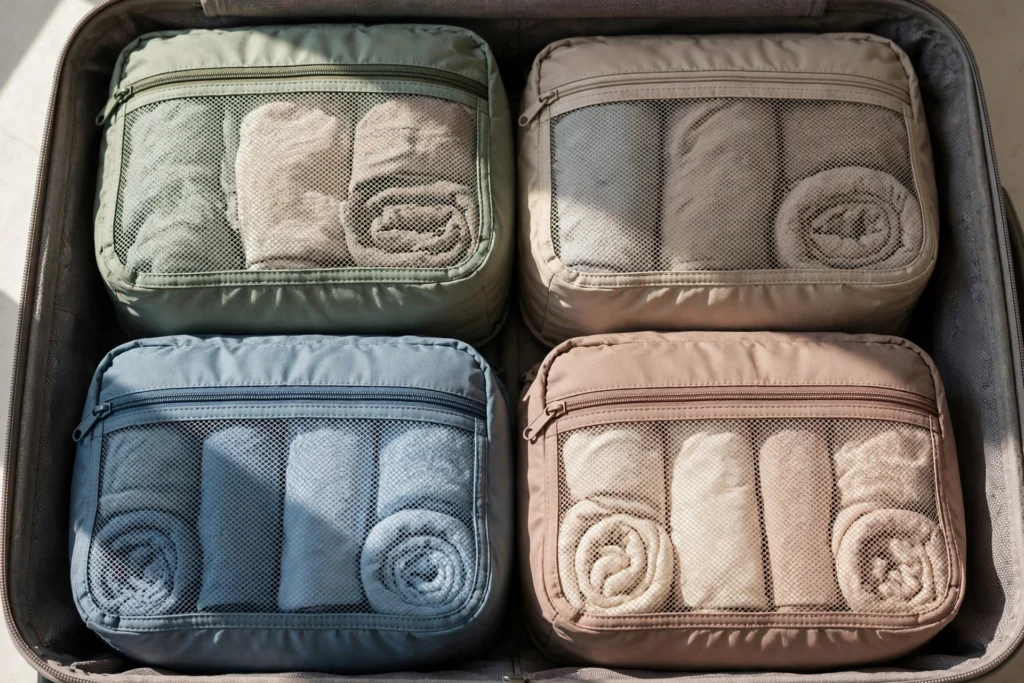
A standard 35–45L carry-on (check your airline’s size limits — budget carriers are strictest) fits this system with room to spare if you pack right:
- Use packing cubes, one per category. Tops in one, bottoms in one, underwear/socks in one. Compression cubes squeeze out air and keep everything organized — you can pull out the “tops” cube without exploding the bag.
- Roll soft items, fold structured ones. Roll t-shirts, leggings, and casual wear to save space and avoid hard creases. Fold the button-down along its seams.
- Shoes sole-to-sole at the bag’s bottom, stuffed with socks to use dead space.
- Toiletries in a quart-size bag (liquids rule: containers 100ml/3.4oz or less). Go solid where possible — shampoo bar, solid deodorant, toothpaste tablets — to beat the liquids limit entirely.
- Wear the bulk. Plane outfit: walking shoes, travel pants, long-sleeve top, puffer jacket. This frees enormous bag space.
Total weight target: under 7–10kg including the bag itself, which covers most airlines’ carry-on limits.
What Everyone Overpacks (Leave These Behind)
Most of these are classic beginner packing mistakes — here’s what to cut:
- “Just in case” outfits. The dressy outfit for the fancy dinner that never happens, the extra jacket for weather that isn’t forecast. If it’s for a hypothetical, it stays home.
- Too many shoes. Two pairs is the rule. Every additional pair eats the space of 3–4 clothing items.
- Full-size toiletries. Buy sunscreen and basics at your destination — they’re cheaper there anyway in most of Asia and Latin America.
- Guidebooks and heavy books. E-reader or phone. One physical book maximum, and only if you’re a devoted paper reader.
- Excessive electronics. Phone, one cable, one compact multi-port charger, earbuds, universal adapter. The “just in case” tablet, second camera, and Bluetooth speaker stay home.
- Cotton everything. As noted above — cotton is the enemy of light packing. Synthetics and merino earn their place; cotton doesn’t.
Adapting the System: Cold Weather and Special Cases
Cold destinations: the system still works — add thermal base layers (they’re thin), swap shorts for a second pair of pants, and upgrade the puffer. Wear the heavy coat on the plane. For a cold-weather packing test case, see our Japan solo travel guide.
Beach-heavy trips: add swimwear (2 — one to wear, one drying) and drop a layer. A sarong replaces the scarf.
Business + leisure: one wrinkle-resistant button-down and dark chinos handle “smart casual.” Don’t pack a suit — rent locally if needed.
FAQs
Can you really do two weeks with only a carry-on? Yes — with a capsule wardrobe (everything matches everything) and one laundry session mid-trip. You’re packing for 7–8 days of wear, not 14. Millions of long-term travelers live out of carry-ons for months using exactly this system.
What size bag do I need? A 35–45L carry-on works for most two-week trips in moderate climates. Always check your specific airline’s size and weight limits before buying — budget airlines enforce them strictly, and a bag that’s fine on a legacy carrier may not be on a low-cost one.
How do I do laundry while traveling? Drop-off laundry services are cheap and ubiquitous across Asia and Latin America (often $1–3/kg, returned in 24 hours). Hostels can point you to the nearest one. For quick refreshes, sink-wash quick-dry items — they dry overnight in most climates.
What about the liquids rule? Containers must be 100ml (3.4oz) or less, all fitting in one quart-size clear bag. Going solid (shampoo bars, solid deodorant, toothpaste tablets) sidesteps the limit almost entirely and saves space.
Won’t I get bored wearing the same things? Unlikely — you’ll be too busy. And changing one variable per outfit (different top, different shoes, scarf on/off) keeps a neutral capsule feeling fresh across two weeks.
Packing light isn’t deprivation — the best travel experiences have nothing to do with what’s in your bag. One carry-on, two weeks, zero baggage carousels: once you travel this way, you’ll never go back.