Solo Travel Tips for Beginners: How to Travel Alone Safely and Confidently
Traveling alone can be one of the most rewarding ways to explore the world. You can choose your own destination, create your own schedule, and experience a new place at your own pace. However, solo travel for beginners can also feel overwhelming if you have never taken a trip by yourself.
The good news is that you do not need to be an experienced traveler to start. With some preparation, sensible planning, and a flexible attitude, your first solo trip can become a memorable experience. These practical solo travel tips will help you prepare for your journey, manage your budget, stay organized, and travel with greater confidence.


1. Choose the Right Destination for Your First Solo Trip
One of the most important steps when traveling alone is choosing a destination that matches your experience level. For a first trip, consider places with reliable public transportation, accessible accommodation, useful tourist information, and activities that are easy to organize.
You do not necessarily need to travel to the other side of the world. A nearby city or region can be an excellent way to learn how solo travel works before planning a longer international journey.
Before booking anything, research the local transportation system, weather, neighborhoods, cultural customs, and common travel requirements. Knowing what to expect can make your arrival much less stressful.
2. Plan the Important Parts, Not Every Minute
Good planning can make solo travel easier, but you do not need to create a strict schedule for every hour.
Before leaving home, have your accommodation booked for at least the first part of your trip. Save the address and directions somewhere you can access offline. Research how you will get from the airport, train station, or bus terminal to your accommodation.
It is also useful to create a simple itinerary containing your main activities, transportation information, and important contact details. Leave some free time so you can explore without feeling rushed.
3. Create a Realistic Travel Budget
Budgeting is especially important when traveling alone because there is no travel partner to share certain expenses with.
Calculate the expected cost of:
- Flights or other transportation
- Accommodation
- Food and drinks
- Local transportation
- Attractions and activities
- Travel insurance
- Emergency expenses
Keep a small emergency fund separate from your everyday spending money. You should also have access to more than one payment method in case a card is lost or unavailable.
A simple daily spending limit can help you enjoy your trip without constantly worrying about money.
4. Pack Light and Pack Smart
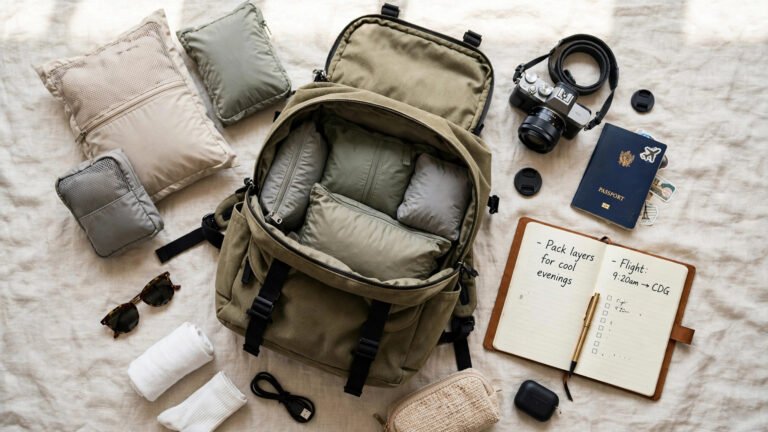
One of the most useful solo travel packing tips is to avoid taking things you probably will not use.
When you travel alone, you are responsible for carrying and watching your own luggage. A lighter bag makes airports, public transportation, walking, and hotel changes much easier.
Focus on versatile clothing that can be used in different situations. Pack comfortable shoes, basic toiletries, necessary medication, chargers, identification documents, and weather-appropriate clothing.


5. Keep Your Important Documents Secure
Before your trip, make digital copies of important documents such as your passport, identification, travel reservations, and insurance information.
Store copies securely online so you can access them if your physical documents are lost. Keep your original documents in a secure place while traveling and avoid carrying unnecessary valuables.
It is also helpful to save important phone numbers and addresses offline. If your phone battery dies or you lose internet access, you will still have essential information available.
6. Learn Basic Solo Travel Safety Tips
Safety should be part of your planning without preventing you from enjoying your trip.
Research your destination before arrival and learn which areas are best avoided, particularly late at night. Keep an eye on your belongings in crowded places and be cautious when sharing personal information with strangers.
When going somewhere unfamiliar, let someone you trust know your general plans. If you change your itinerary significantly, send them an update.
Trust your instincts. If a situation feels uncomfortable or unsafe, leave and move to a more public location.
7. Choose Your Accommodation Carefully
Accommodation can have a major effect on your solo travel experience.
Look beyond the price when choosing where to stay. Consider the location, transportation access, reviews, check-in arrangements, and security features.
Hostels can be useful for solo travelers who want to meet other people, while hotels and private apartments may offer more privacy. Choose the type of accommodation that matches your comfort level and travel style.
8. Stay Connected While Traveling Alone
Having a reliable way to communicate can make your trip much easier.
Make sure your phone works at your destination and consider an appropriate local SIM or eSIM if necessary. Download maps before leaving Wi-Fi so you can navigate even when you do not have an internet connection.
Useful travel apps can help with maps, translation, transportation, accommodation, and currency conversion. However, do not rely completely on your phone. Keep important addresses and information available offline as a backup.
9. Do Not Be Afraid to Meet People
Traveling alone does not mean you have to spend the entire trip alone.
Joining a walking tour, taking a cooking class, visiting a group attraction, or staying in a social hostel can provide opportunities to meet other travelers.
At the same time, remember that you do not have to trust everyone you meet. Be friendly while maintaining reasonable boundaries, particularly when sharing personal information or making plans with strangers.
10. Give Yourself Time to Enjoy the Experience
The biggest mistake beginners can make is trying to see everything during their first solo trip.
Give yourself time to sit in a café, walk through a local neighborhood, visit a museum, or simply enjoy the surroundings. One of the benefits of traveling alone is having complete control over your schedule.
You may also discover that solo travel teaches you things that are difficult to learn from everyday routines. You become more comfortable making decisions, solving unexpected problems, and adapting to unfamiliar situations.
A Simple Checklist Before Your First Solo Trip
Before leaving home, check that you have:
- Valid passport or identification
- Required visas or travel documents
- Accommodation confirmation
- Travel insurance information
- Emergency contact details
- Payment cards and some backup funds
- Phone charger and power bank
- Necessary medication
- Offline maps
- Copies of important documents
- Weather-appropriate clothing
Final Thoughts
Your first solo trip does not need to be complicated. Start with a destination that feels manageable, plan the essentials, pack carefully, and give yourself enough flexibility to enjoy the experience.
The best solo travel tips are often simple: stay organized, protect your important belongings, understand your destination, keep someone informed about your plans, and remain open to new experiences.
With each trip, you can become more comfortable navigating unfamiliar places and making your own travel decisions. Whether you are planning a weekend getaway or a longer international adventure, solo travel can give you the freedom to explore the world on your own terms.
FAQs
Is solo travel safe for beginners?
Solo travel can be made safer through preparation, destination research, secure accommodation, awareness of your surroundings, and keeping trusted contacts informed about your plans.
What should I do on my first solo trip?
Start with a manageable destination and plan your accommodation, transportation, budget, documents, and main activities in advance. Leav