Solo Travel With Anxiety: A Calm, Practical Guide
Here’s something the glossy solo travel content rarely admits: solo travel anxiety is normal. Most solo travelers — including the confident-looking ones posting sunset photos — felt nervous before their first trip. Some still feel it before every trip. Anxiety about traveling alone doesn’t mean you’re not cut out for it. It means you’re a human being doing something unfamiliar, and unfamiliar things feel uncomfortable until they don’t.
This guide is the calm, practical companion for that feeling: what to do before you go, routines that keep you steady on the road, what to do when anxiety spikes mid-trip, and when to bring in professional support. (A note: this is general wellness guidance from experienced travelers, not medical advice. If anxiety significantly affects your daily life, a mental health professional can help in ways no travel blog can.)
First, Reframe What Anxiety Is Telling You
Anxiety before a solo trip usually clusters around a few specific fears: getting lost, getting lonely, getting sick, getting scammed, or simply not coping. Notice that these are all logistical fears — and logistics can be prepared for. That’s genuinely good news: most travel anxiety responds to preparation, not just positive thinking.
It also helps to know anxiety and excitement feel similar physically — and many travelers find the “anxiety” they felt at home becomes alertness, then confidence, within the first 48 hours on the road.
Before the Trip: Preparation That Actually Calms

Preparation is the most effective anti-anxiety tool there is. Each of these removes one unknown:
- Choose an easy first destination. Pick somewhere with good infrastructure, a well-worn solo-traveler trail, and a language you can partially navigate. Thailand, Portugal, Japan, and Vietnam are classic first-solo-trip answers for a reason — our Vietnam beginner’s guide shows what an anxiety-friendly destination looks like in practice.
- Book the first two nights in advance. Decision fatigue hits hardest when you’re jet-lagged. Land knowing exactly where you’re sleeping.
- Plan your arrival in detail. Know how you get from the airport to your accommodation — pre-booked transfer, airport train route, or ride-hailing app installed. The arrival is the highest-anxiety moment of most trips; defuse it in advance.
- Make checklists. A packing checklist, a documents checklist, a “day before departure” checklist. Checking things off gives your brain the sense of control it’s craving. Our first-trip planning guide includes planning frameworks you can adapt.
- Learn grounding techniques before you go. Don’t wait until you’re panicking in a crowded train station to Google coping strategies. Two to learn now (details below): box breathing and the 5-4-3-2-1 method.
- Set up your support system. Tell someone your itinerary. Agree on check-in rhythms. Save your country’s embassy number and your travel insurance emergency line in your phone.
- Pack a comfort kit. A familiar book, noise-canceling earbuds, a scent you like, a playlist that calms you — small anchors of familiarity in unfamiliar places.
On-the-Road Routines That Keep You Steady
Anxiety thrives on chaos and shrinks around routine. Build a light daily structure:
Morning anchor. Same start daily: coffee, a short walk, ten minutes reviewing the day’s loose plan.
One main thing per day. Plan a single anchor activity — a walking tour, a museum, a hike — and let the rest of the day be open. An overstuffed itinerary is an anxiety machine; a loose one is freedom.
Evening wind-down. Journal briefly, message someone at home, sketch tomorrow’s rough plan — going to bed with tomorrow mapped prevents 2 a.m. worry spirals.
Move your body. Anxious energy festers in a hotel room and dissolves on a walk — when you feel a spiral starting, go outside and move.
Eat and sleep properly. Dehydration, hunger, and sleep deprivation mimic anxiety — when a spiral starts, check water, food, and rest first.
When Anxiety Spikes: Your In-the-Moment Playbook
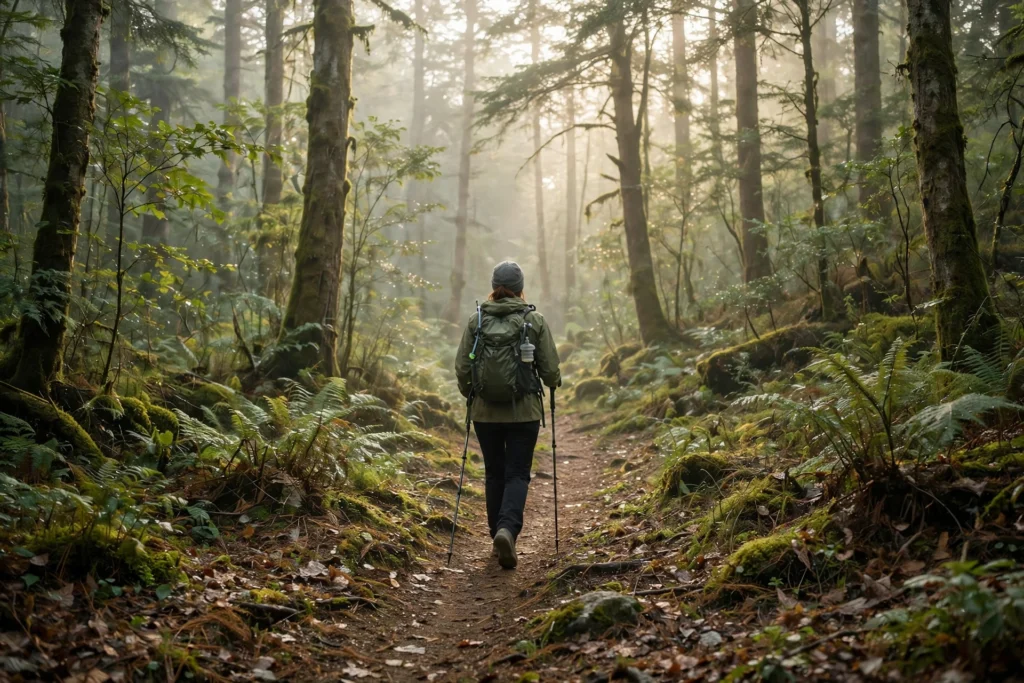
Despite the best preparation, there will be moments — the missed train, the confusing metro, the wave of homesickness at dinner alone. Here’s what to do:
1. Box breathing. Breathe in for 4 counts, hold for 4, out for 4, hold for 4, repeat. It directly calms your nervous system and you can do it anywhere — hostel dorm, bus seat, busy street — without anyone noticing.
2. The 5-4-3-2-1 method. Name 5 things you can see, 4 you can touch, 3 you can hear, 2 you can smell, 1 you can taste. This pulls your brain out of catastrophic future-thinking and into the present moment, where you’re almost always fine.
3. Shrink the problem. Anxiety globalizes: “I’m lost” becomes “this whole trip was a mistake.” Force specificity: “I’m on the wrong metro line. The fix is getting off at the next stop and checking the map.” Small, concrete problems have small, concrete solutions.
4. Give yourself permission to retreat. There’s no rule that says you must be sightseeing every moment. Go back to your room. Watch something familiar. Order room service. Rest is a legitimate travel activity, and forcing yourself through a panic spiral to “not waste the day” always backfires.
5. Talk to someone. Message a friend. Call home. Or do the bravest-feeling thing: tell a fellow traveler or hostel staff member you’re feeling overwhelmed. You’ll be amazed how many people respond with “me too” — loneliness on the road is universal, and connection is the fastest antidote.
The Social Anxiety Special Case
For many, the hardest part of solo travel isn’t logistics — it’s other people. Eating alone, joining group tours, starting conversations. A few truths that help:
- Eating alone is normal in most of the world. Bring a book the first few times; you’ll abandon it by day three.
- Group tours and classes are easier for socially anxious travelers than bars, because the activity gives you something to talk about besides yourselves.
- You don’t have to be extroverted to meet people traveling solo. Quiet friendliness — a smile, a question about someone’s day — works better than performance.
- It’s okay to be alone on purpose. Solo travel isn’t a social performance. Some of the best solo trips involve long stretches of happy solitude punctuated by brief, genuine connections.
When to Seek Professional Help
Consider speaking with a mental health professional before your trip if anxiety regularly disrupts daily life, you’ve had panic attacks, or the thought of traveling triggers dread rather than nervous excitement. Many travelers do exactly this before big trips — there’s no shame in it.
If anxiety becomes overwhelming during a trip — persistent panic, inability to leave your accommodation for days, or thoughts of harming yourself — contact your travel insurance’s emergency line, your country’s embassy, or local emergency services. Your safety matters more than any itinerary.
Start Small: The Anxiety-Friendly Path to Solo Travel
You don’t have to start with a month in Southeast Asia. Try a graduated path: a solo day trip, then a solo weekend, then a solo week in an easy destination — each step builds evidence for your anxious brain: I did that, and I was fine.
FAQs
Is it normal to feel anxious before traveling alone? Completely normal. Pre-trip anxiety affects the large majority of first-time solo travelers and many experienced ones. It typically peaks in the days before departure and fades significantly within the first 48 hours on the road.
What if I have a panic attack while traveling alone? Use grounding techniques you’ve practiced (box breathing, 5-4-3-2-1), get somewhere you feel safe (your room, a quiet cafe), and ride it out — panic attacks peak and pass. If they recur or you’re struggling, contact your travel insurance helpline or a local medical professional. Having a plan for this before the trip reduces the fear of it happening.
What’s the best destination for anxious first-time solo travelers? Places with strong tourist infrastructure, low language barriers, and established solo-traveler communities: Portugal, Thailand, Japan, Ireland, and Vietnam are all excellent. The key factors are feeling oriented quickly and having easy access to help if needed.
Anxiety doesn’t disqualify you from solo travel.